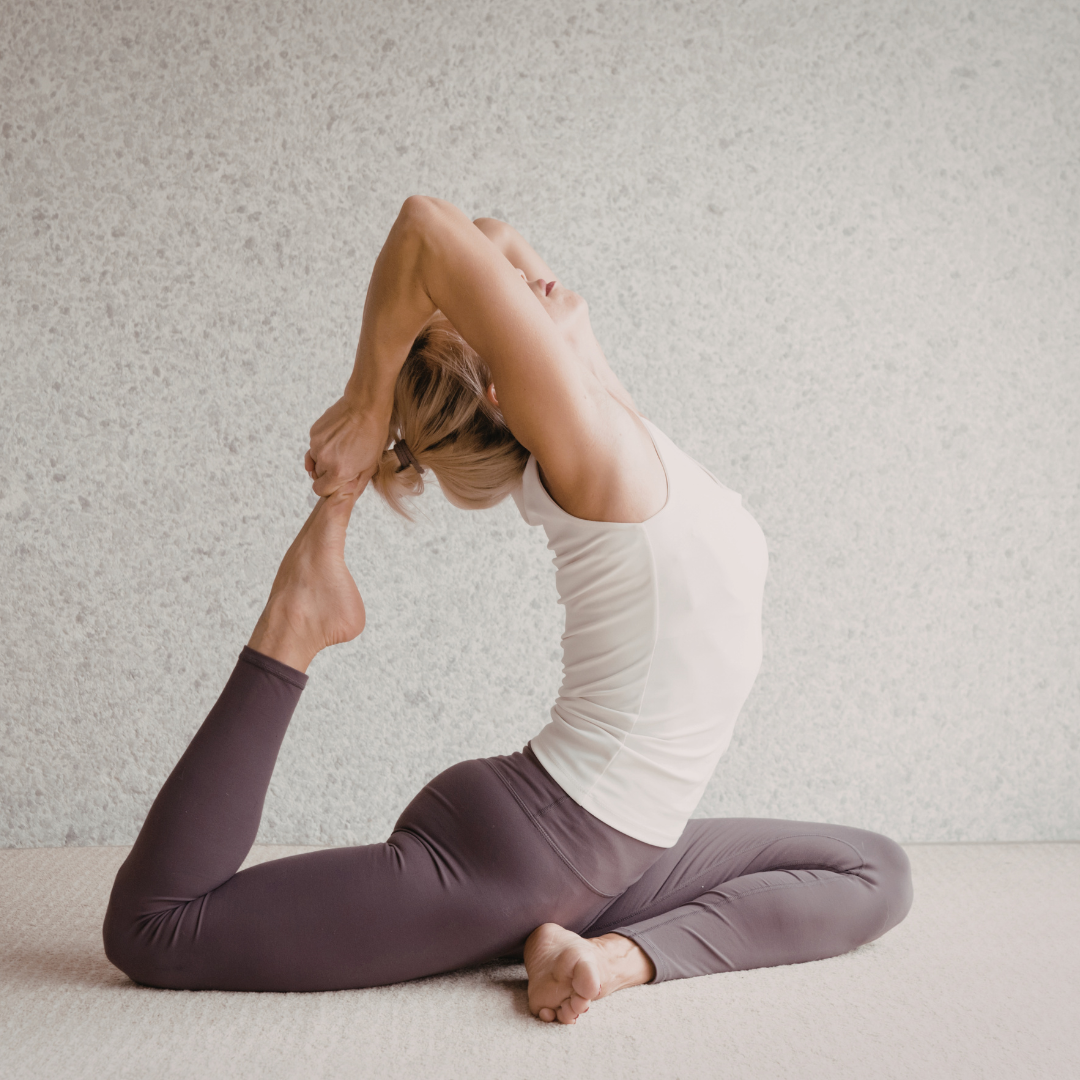
7 Lower Back Stretches that Soothe
Lower back pain is a widespread ailment, affecting a significant [...]
Lower back pain is a widespread ailment, affecting a significant portion of the adult population at some point in their lives. Whether it’s from sitting for prolonged periods, strenuous physical activity, or underlying medical conditions, lower back pain can significantly impact daily life. While seeking professional medical advice is crucial for persistent or severe pain, incorporating simple stretches into your routine can provide relief and improve overall back health.
This guide provides seven effective stretches designed to target the muscles contributing to lower back discomfort. By understanding the mechanics of each stretch and practicing them regularly, you can promote flexibility, reduce tension, and manage lower back pain more effectively.
Understanding the Causes of Lower Back Pain
Before delving into the stretches, it’s important to understand the potential causes of lower back pain. These can include:
- Muscle Strain: Overexertion, improper lifting techniques, or sudden movements can strain the muscles in the lower back.
- Poor Posture: Slouching or maintaining poor posture while sitting or standing can put excessive stress on the spine and surrounding muscles.
- Disc Problems: Herniated or bulging discs can compress nerves in the lower back, leading to pain, numbness, or weakness.
- Arthritis: Osteoarthritis and other forms of arthritis can affect the joints in the spine, causing pain and stiffness.
- Sciatica: Compression or irritation of the sciatic nerve, which runs from the lower back down the leg, can cause radiating pain.
- Lack of Exercise: A sedentary lifestyle can weaken the muscles that support the spine, making it more vulnerable to injury and pain.
Precautions Before Stretching
Before starting any new stretching routine, keep the following precautions in mind:
- Consult a Healthcare Professional: If you have a history of back problems, injuries, or underlying medical conditions, consult your doctor or a physical therapist before starting these stretches.
- Warm-Up: Before stretching, warm up your muscles with light cardio, such as walking or marching in place, for 5-10 minutes. This increases blood flow and prepares your muscles for stretching.
- Proper Form: Focus on maintaining proper form throughout each stretch. Avoid jerking or bouncing movements, which can increase the risk of injury.
- Listen to Your Body: Stretch to the point of mild tension, but never push yourself into pain. If you experience sharp or radiating pain, stop the stretch immediately.
- Breathe: Breathe deeply and evenly throughout each stretch. Holding your breath can increase muscle tension and reduce the effectiveness of the stretch.
- Consistency: Consistency is key to seeing results. Aim to perform these stretches regularly, ideally daily or several times a week.
Seven Effective Stretches for Lower Back Pain Relief
Here are seven stretches that can help alleviate lower back pain and improve flexibility:
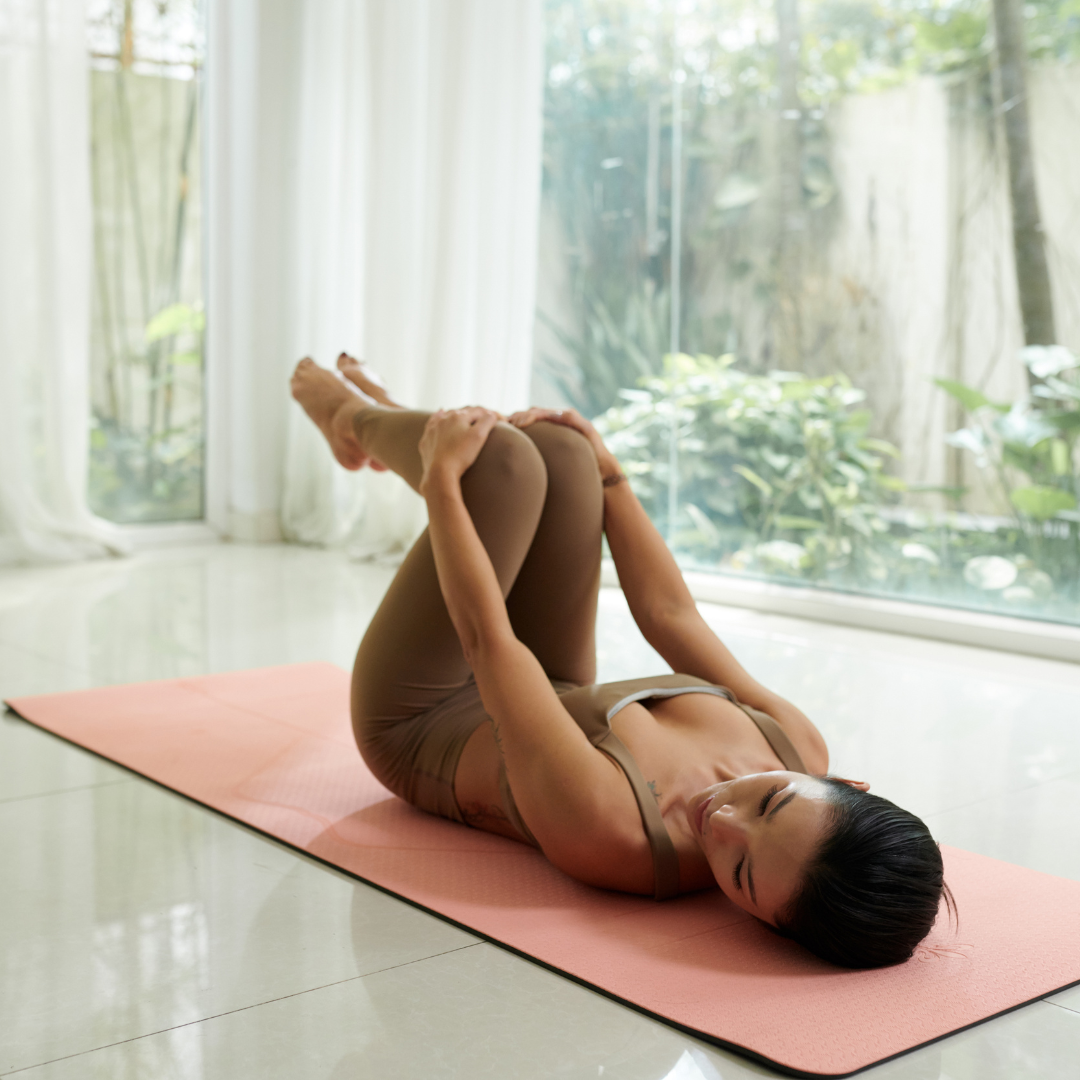
1. Knee-to-Chest Stretch
The knee-to-chest stretch is a gentle exercise that helps to lengthen the muscles of the lower back and hips.
How to Perform:
- Lie on your back with your knees bent and feet flat on the floor.
- Gently bring one knee towards your chest, clasping your hands behind your thigh or shin.
- Keep your lower back pressed against the floor.
- Hold the stretch for 20-30 seconds, breathing deeply.
- Slowly release your leg and repeat on the other side.
- Perform 2-3 repetitions on each leg.
Benefits:
- Reduces tension in the lower back muscles.
- Increases flexibility in the hips.
- Improves spinal mobility.
2. Pelvic Tilt
The pelvic tilt exercise helps to strengthen the abdominal muscles, which support the lower back, and improve posture.
How to Perform:
- Lie on your back with your knees bent and feet flat on the floor.
- Engage your abdominal muscles and gently tilt your pelvis upward, pressing your lower back against the floor.
- Hold the position for 5-10 seconds.
- Slowly release and return to the starting position.
- Repeat 10-15 times.
Benefits:
- Strengthens abdominal muscles.
- Improves posture.
- Reduces lower back pain.
3. Cat-Cow Stretch
The cat-cow stretch is a dynamic movement that improves flexibility and coordination of the spine while gently massaging the spinal discs.
How to Perform:
- Start on your hands and knees, with your hands shoulder-width apart and your knees hip-width apart.
- Inhale and drop your belly towards the floor, arching your back and lifting your head and tailbone (cow pose).
- Exhale and round your spine towards the ceiling, tucking your chin to your chest and drawing your tailbone inward (cat pose).
- Continue alternating between cat and cow poses for 1-2 minutes, coordinating your movements with your breath.
Benefits:
- Increases spinal flexibility.
- Reduces muscle tension in the back and neck.
- Improves posture and balance.
4. Piriformis Stretch
The piriformis muscle is located deep in the buttock and can contribute to lower back pain and sciatica if it becomes tight or inflamed. This stretch targets that muscle to release tension.
How to perform:
- Lie on your back with your knees bent and feet flat on the floor.
- Cross your right ankle over your left knee.
- Grasp behind your left thigh and gently pull your left knee toward your chest.
- You should feel a stretch in your right buttock.
- Hold the stretch for 20-30 seconds, breathing deeply.
- Release and repeat on the other side.
- Perform 2-3 repetitions on each side.
Benefits:
- Releases tension in the piriformis muscle.
- Reduces sciatic nerve compression.
- Alleviates lower back and buttock pain.
5. Lower Trunk Rotation
This stretch gently rotates the spine, improving flexibility and relieving stiffness in the lower back.
How to Perform:
- Lie on your back with your knees bent and feet flat on the floor.
- Extend your arms out to the sides, forming a “T” shape.
- Keeping your shoulders flat on the floor, gently lower both knees to one side, rotating your lower back.
- Hold the stretch for 20-30 seconds, breathing deeply.
- Return to the center and repeat on the other side.
- Perform 2-3 repetitions on each side.
Benefits:
- Increases spinal mobility.
- Releases tension in the lower back muscles.
- Improves flexibility and range of motion.
6. Child’s Pose
Child’s pose is a relaxing stretch that gently lengthens the spine, hips, and thighs, promoting relaxation and reducing stress.
How to Perform:
- Start on your hands and knees.
- Sit back on your heels and lower your chest towards the floor.
- Extend your arms forward, reaching your fingertips towards the front of the mat.
- Rest your forehead on the floor.
- Hold the pose for 30-60 seconds, breathing deeply.
Benefits:
- Gently stretches the lower back, hips, and thighs.
- Reduces stress and promotes relaxation.
- Improves spinal flexibility.
7. Standing Back Extension
This simple stretch can be done virtually anywhere and helps counteract the effects of prolonged sitting by extending the spine.
How to Perform:
- Stand with your feet shoulder-width apart and place your hands on your lower back.
- Gently lean back, arching your spine slightly.
- Keep your knees slightly bent to avoid overextending.
- Hold the stretch for 5-10 seconds.
- Return to the starting position and repeat 10-15 times.
Benefits:
- Counteracts the effects of sitting.
- Increases spinal extension.
- Relieves lower back stiffness.
Incorporating Stretches into Your Daily Routine
Integrating these stretches into your daily routine can significantly improve your lower back health and reduce pain. Here are some tips:
- Morning Routine: Start your day with a few stretches to loosen up your back after sleeping.
- Breaks During Work: Take short breaks throughout the day to stand up and perform a few stretches, especially if you sit for extended periods.
- Post-Workout: Stretch your back after exercise to prevent muscle stiffness and soreness.
- Evening Routine: Wind down before bed with gentle stretches to relax your muscles and prepare for sleep.
Conclusion
Lower back pain can significantly impact your quality of life. By incorporating these seven stretches into your daily routine, you can improve flexibility, reduce muscle tension, and manage lower back pain more effectively. Remember to listen to your body, maintain proper form, and consult with a healthcare professional if you have any concerns. Consistency is key to achieving long-term relief and improved back health.
Share this article
A quick overview of the topics covered in this article.
Latest articles

December 15, 2025

January 13, 2026

January 10, 2026

January 6, 2026

January 5, 2026

January 9, 2026
February 9, 2026

7 Lower Back Stretches that Soothe
Lower back pain is a widespread ailment, affecting a significant [...]
Lower back pain is a widespread ailment, affecting a significant portion of the adult population at some point in their lives. Whether it’s from sitting for prolonged periods, strenuous physical activity, or underlying medical conditions, lower back pain can significantly impact daily life. While seeking professional medical advice is crucial for persistent or severe pain, incorporating simple stretches into your routine can provide relief and improve overall back health.
This guide provides seven effective stretches designed to target the muscles contributing to lower back discomfort. By understanding the mechanics of each stretch and practicing them regularly, you can promote flexibility, reduce tension, and manage lower back pain more effectively.
Understanding the Causes of Lower Back Pain
Before delving into the stretches, it’s important to understand the potential causes of lower back pain. These can include:
- Muscle Strain: Overexertion, improper lifting techniques, or sudden movements can strain the muscles in the lower back.
- Poor Posture: Slouching or maintaining poor posture while sitting or standing can put excessive stress on the spine and surrounding muscles.
- Disc Problems: Herniated or bulging discs can compress nerves in the lower back, leading to pain, numbness, or weakness.
- Arthritis: Osteoarthritis and other forms of arthritis can affect the joints in the spine, causing pain and stiffness.
- Sciatica: Compression or irritation of the sciatic nerve, which runs from the lower back down the leg, can cause radiating pain.
- Lack of Exercise: A sedentary lifestyle can weaken the muscles that support the spine, making it more vulnerable to injury and pain.
Precautions Before Stretching
Before starting any new stretching routine, keep the following precautions in mind:
- Consult a Healthcare Professional: If you have a history of back problems, injuries, or underlying medical conditions, consult your doctor or a physical therapist before starting these stretches.
- Warm-Up: Before stretching, warm up your muscles with light cardio, such as walking or marching in place, for 5-10 minutes. This increases blood flow and prepares your muscles for stretching.
- Proper Form: Focus on maintaining proper form throughout each stretch. Avoid jerking or bouncing movements, which can increase the risk of injury.
- Listen to Your Body: Stretch to the point of mild tension, but never push yourself into pain. If you experience sharp or radiating pain, stop the stretch immediately.
- Breathe: Breathe deeply and evenly throughout each stretch. Holding your breath can increase muscle tension and reduce the effectiveness of the stretch.
- Consistency: Consistency is key to seeing results. Aim to perform these stretches regularly, ideally daily or several times a week.
Seven Effective Stretches for Lower Back Pain Relief
Here are seven stretches that can help alleviate lower back pain and improve flexibility:
1. Knee-to-Chest Stretch
The knee-to-chest stretch is a gentle exercise that helps to lengthen the muscles of the lower back and hips.
How to Perform:
- Lie on your back with your knees bent and feet flat on the floor.
- Gently bring one knee towards your chest, clasping your hands behind your thigh or shin.
- Keep your lower back pressed against the floor.
- Hold the stretch for 20-30 seconds, breathing deeply.
- Slowly release your leg and repeat on the other side.
- Perform 2-3 repetitions on each leg.
Benefits:
- Reduces tension in the lower back muscles.
- Increases flexibility in the hips.
- Improves spinal mobility.
2. Pelvic Tilt
The pelvic tilt exercise helps to strengthen the abdominal muscles, which support the lower back, and improve posture.
How to Perform:
- Lie on your back with your knees bent and feet flat on the floor.
- Engage your abdominal muscles and gently tilt your pelvis upward, pressing your lower back against the floor.
- Hold the position for 5-10 seconds.
- Slowly release and return to the starting position.
- Repeat 10-15 times.
Benefits:
- Strengthens abdominal muscles.
- Improves posture.
- Reduces lower back pain.
3. Cat-Cow Stretch
The cat-cow stretch is a dynamic movement that improves flexibility and coordination of the spine while gently massaging the spinal discs.
How to Perform:
- Start on your hands and knees, with your hands shoulder-width apart and your knees hip-width apart.
- Inhale and drop your belly towards the floor, arching your back and lifting your head and tailbone (cow pose).
- Exhale and round your spine towards the ceiling, tucking your chin to your chest and drawing your tailbone inward (cat pose).
- Continue alternating between cat and cow poses for 1-2 minutes, coordinating your movements with your breath.
Benefits:
- Increases spinal flexibility.
- Reduces muscle tension in the back and neck.
- Improves posture and balance.
4. Piriformis Stretch
The piriformis muscle is located deep in the buttock and can contribute to lower back pain and sciatica if it becomes tight or inflamed. This stretch targets that muscle to release tension.
How to perform:
- Lie on your back with your knees bent and feet flat on the floor.
- Cross your right ankle over your left knee.
- Grasp behind your left thigh and gently pull your left knee toward your chest.
- You should feel a stretch in your right buttock.
- Hold the stretch for 20-30 seconds, breathing deeply.
- Release and repeat on the other side.
- Perform 2-3 repetitions on each side.
Benefits:
- Releases tension in the piriformis muscle.
- Reduces sciatic nerve compression.
- Alleviates lower back and buttock pain.
5. Lower Trunk Rotation
This stretch gently rotates the spine, improving flexibility and relieving stiffness in the lower back.
How to Perform:
- Lie on your back with your knees bent and feet flat on the floor.
- Extend your arms out to the sides, forming a “T” shape.
- Keeping your shoulders flat on the floor, gently lower both knees to one side, rotating your lower back.
- Hold the stretch for 20-30 seconds, breathing deeply.
- Return to the center and repeat on the other side.
- Perform 2-3 repetitions on each side.
Benefits:
- Increases spinal mobility.
- Releases tension in the lower back muscles.
- Improves flexibility and range of motion.
6. Child’s Pose
Child’s pose is a relaxing stretch that gently lengthens the spine, hips, and thighs, promoting relaxation and reducing stress.
How to Perform:
- Start on your hands and knees.
- Sit back on your heels and lower your chest towards the floor.
- Extend your arms forward, reaching your fingertips towards the front of the mat.
- Rest your forehead on the floor.
- Hold the pose for 30-60 seconds, breathing deeply.
Benefits:
- Gently stretches the lower back, hips, and thighs.
- Reduces stress and promotes relaxation.
- Improves spinal flexibility.
7. Standing Back Extension
This simple stretch can be done virtually anywhere and helps counteract the effects of prolonged sitting by extending the spine.
How to Perform:
- Stand with your feet shoulder-width apart and place your hands on your lower back.
- Gently lean back, arching your spine slightly.
- Keep your knees slightly bent to avoid overextending.
- Hold the stretch for 5-10 seconds.
- Return to the starting position and repeat 10-15 times.
Benefits:
- Counteracts the effects of sitting.
- Increases spinal extension.
- Relieves lower back stiffness.
Incorporating Stretches into Your Daily Routine
Integrating these stretches into your daily routine can significantly improve your lower back health and reduce pain. Here are some tips:
- Morning Routine: Start your day with a few stretches to loosen up your back after sleeping.
- Breaks During Work: Take short breaks throughout the day to stand up and perform a few stretches, especially if you sit for extended periods.
- Post-Workout: Stretch your back after exercise to prevent muscle stiffness and soreness.
- Evening Routine: Wind down before bed with gentle stretches to relax your muscles and prepare for sleep.
Conclusion
Lower back pain can significantly impact your quality of life. By incorporating these seven stretches into your daily routine, you can improve flexibility, reduce muscle tension, and manage lower back pain more effectively. Remember to listen to your body, maintain proper form, and consult with a healthcare professional if you have any concerns. Consistency is key to achieving long-term relief and improved back health.
Share this article
A quick overview of the topics covered in this article.
Latest articles
January 13, 2026

August 5, 2025